
Competencias
El Estudiante sueros Capaz de:
Reconocer y emplear expresiones para comunicarse en el Salón de Clase.
Reconocer la importancia del Inglés como Lengua Extranjera, estableciendo diferencias del inglés con respecto a su lengua Materna.
My School
Lesson One. The alphabet
1. Relacionar la pronunciación del alfabeto con la pronunciacion de colores
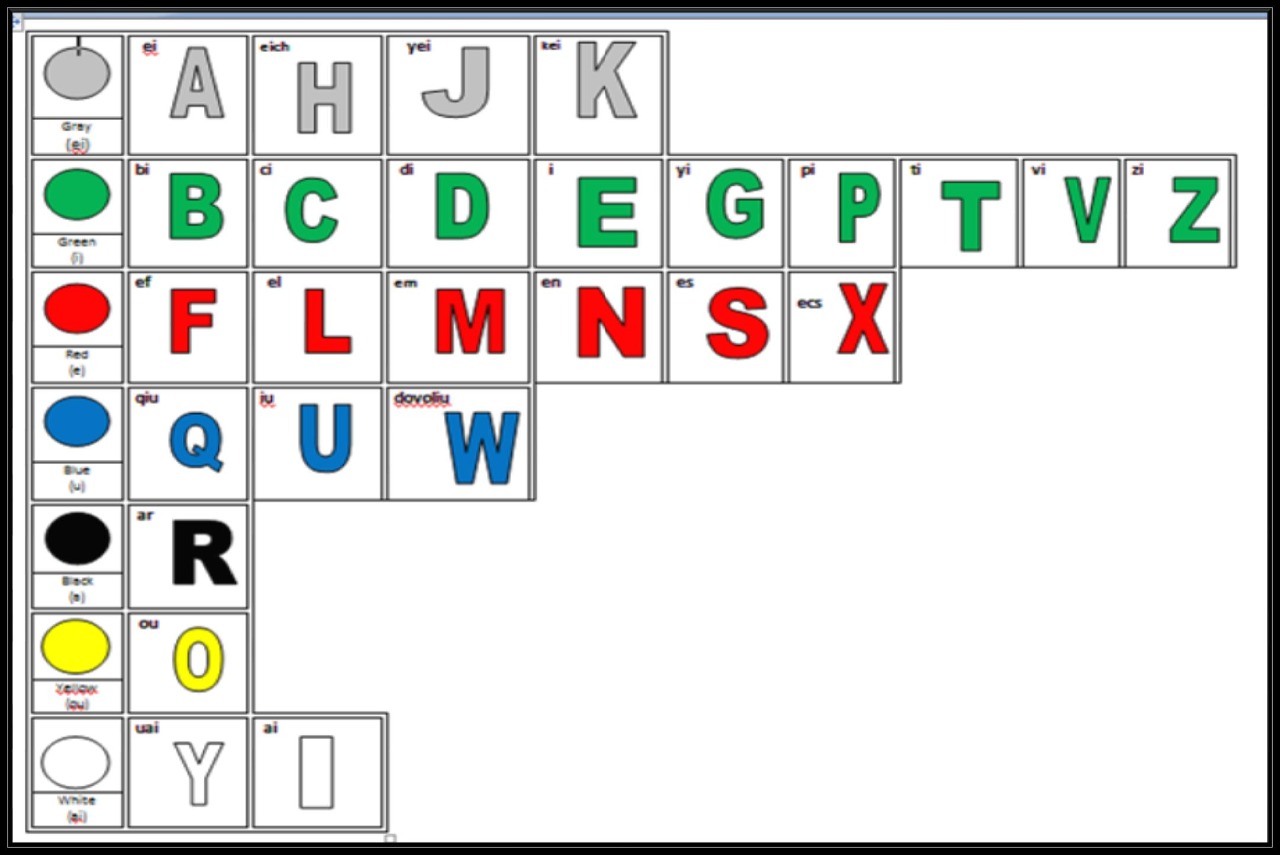
2. Realizar alfabeto gráfico siguiendo el ejemplo de los flashcard.
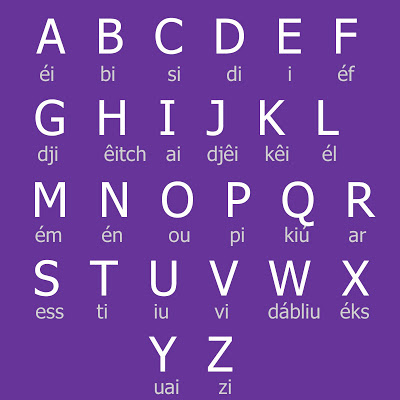
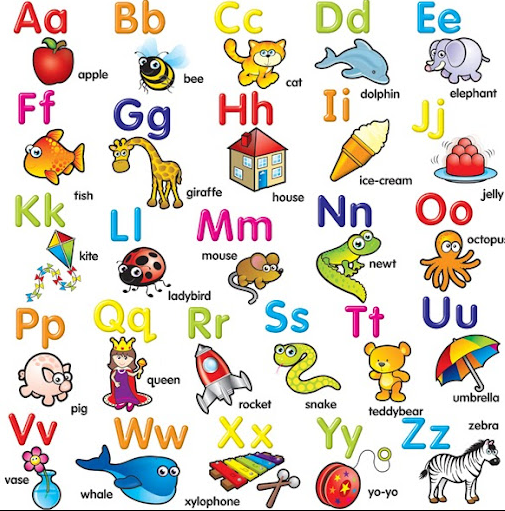
3. Realizar las prácticas de pronunciación con la ayuda de los siguientes videos
www.juegoloco.com/juegos/83/Abecedario-en-Ingles.htm
4. Observe y pronuncie las frases que hay en los flashcards
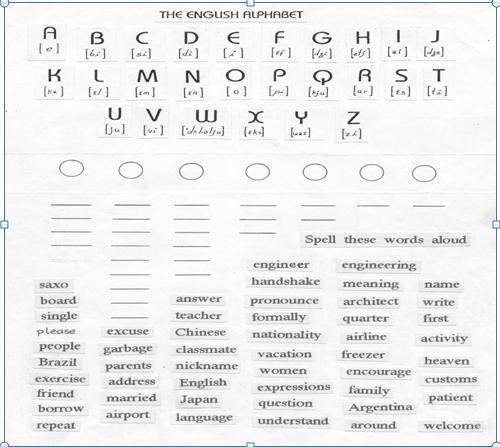
5. LET´S SING AND SIGN THE ALPHABET
Here you are the alphabet song we´ve been practising and enjoying these days // Aquí tienes la canción del abecedario que hemos estado practicando estos días.
EVERYBODY SING THE ALPHABET WITH ME... !
Hi! Here it is my favourite alphabet song ever. I know you like it too, so I hope you´ll practise a lot with it. Enjoy! // ¡Hola! aquí está mi canción del abecedario favorita. Sé que a ustedes también les encanta, así que espero que practique mucho. ¡Que la disfrutes!
And now, here you are animations with each letter of the alphabet. Just cllick on the alphaber below to play // Y aquí tenéis algunas animaciones con cada letra del abecedario. Solo tenéis que pinchar en la imagen del alfabeto aquí abajo.
https://www.angles365.com/classroom/c3ABC-2.htm
Lesson Two. The Greetings
1. Para saludar a una persona, utilizamos las siguientes expresiones:
- Hello o Hi (jelou o jai), cuando queremos decir Hola
- How are you (jau ar iu), significa como estás
- Fine, Thank you (fain zen kiu): Bien, gracias
En esta última frase, además de decir Fine, tambien podemos usar las siguientes palabras, dependiendo del estado de animo de la persona: Great (greit) (muy bien), Good (gud) (bien), Terrific (terrific) (excelente o de maravilla), So so (sou sou) (mas o menos),Not good (not gud) (no tan bien), Bad (bad) (mal).
2. Para saludar a una persona dependiendo de la hora, decimos:
Good Morning (gud mornin): Buenos Días
Good Afternoon (gud afternun): Buenas Tardes
Good Evening (gud ifnin): Buenas Noches
NOTA: Para decir Buenas Noches cuando llegamos a un lugar debemos decir Good Evening. La expresión Good Night (gud nait) tambien significa Buenas noches pero cuando nos vamos a dormir o a despedir de una persona.
3. Para despedirnos de alguien utilizamos:
Good Bye (gud bai): Adios
See you later (si yu leirer): Nos vemos luego
See you soon (si yu sun): Nos vemos pronto
Have a nice day (jav a nais dei): Que tengas un buen dia
Have a great time (jav a greit taim): Que te vaya bien
4. Si no conocemos una persona, estas son las expresiones que se usan cuando nos vamos a presentar con esa persona:
What's your name (uats yur neim): Cual es tu nombre o como te llamas
My name is Terry (mai neim is terri): Mi nombre es Terry o me llamo Terry
This is my teacher, Sam (dis is mai ticher, sam): Este es mi profesor, Sam
Nice to meet you (nais tu mit iu): Un placer conocerte (conocerlo)
Nice to meet you too (nais tu mit iu tu): Igualmente
Ademas de decir Nice to meet you, también se pueden utilizar las siguientes expresiones: Glad to meet you, Good to meet you, Pleasure to meet you (pleisur). Tambien se puede decir: Nice meeting you (nais mirin iu).
Suggested activities:
1. Observacion de flashcard



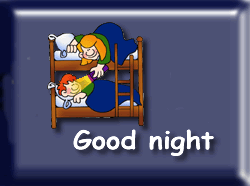



2. Escuchar y pronunciar los saludos
3. Ver vídeo
www.youtube.com/watch?v=_yAiHMw6dgo
4. Elaborar comic empleando los saludos y presentarlo ante sus compañeros.
5. Construcción de dialogo teniendo en cuenta el ejemplo
- Hello! I am Carlos. Nice to meet you (¡Hola! Yo soy Carlos. Un gusto conocerte)
- Hi! I am Maria. Nice to meet you too. How are you? (Hola! Yo soy María. Un gusto conocerte también. ¿Cómo estás tú?
- I am very good, thank you. And you? (Yo estoy muy bien, gracias. ¿Y tú?)
- I am fine, thanks (Yo estoy bien, gracias.)
6. Tomar estas dos conversaciones y después de leerla vamos a practicar la pronunciación.
| Conversation 1 | Conversation 2 |
| Maria: Oh, Hello Juan, how are you? Juan: Fine, thank you. How are you? Maria: O.K, Good Bye Juan: Bye, see you later(adios hasta luego) Juan: You too(tu tambien) |
John: Hello, I am John Stewart, What´s your name? Paul: My name is Paul Roberts. Nice to meet you John John: Nice meeting you too. Maria: Fine, have a nice day |
7. Completa el crucigrama. Observa las pistas
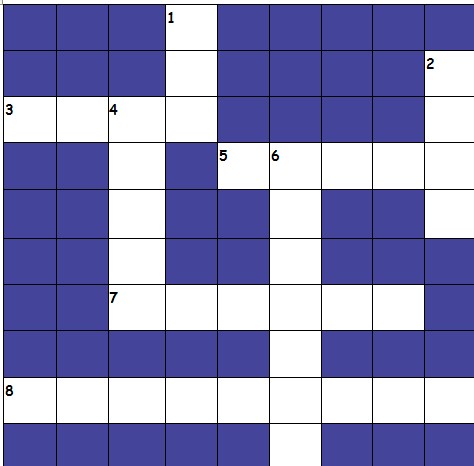
Abajo: 1: - Adiós James. - B_____ de Tony
Abajo: 2: - ¿Cómo estás? - Soy G_____.
Abajo: 4: - Bueno James n____.
Abajo: 6: Después de las 6:00 pm, nos saludamos e_______ bueno.
Al otro lado: 3: - ¿Cómo estás hoy? Somos f______
Al otro lado: 5: - ¡Hola! - H_____
A través de: 7: - Yo soy T______ bien, y usted.
A través de: 8: Entre 1:00 pm y las 6:00 pm nos saludan. Bueno af________
Personal information
What is your name? cual es tu nombre. My name is _______. Mi nombre es
What is your surname / last name? cual es su apellido
My surname / last name is _______. Mi apellido es
How old are you? Cuantos años tienes
I am _______ years old. Yo tengo
When is your birthday? Cuando es tu cumpleaños
my birthday is November 5
My birthday is on the ___ of __.mi cumpleaños es el---- de ----
Where were you born? Donde nacio usted
I was born in _______.yo naci en
Where are you from? De donde eres
I am from _______. Yo soy de
What is your address? Cuál es tu direccion
My address is _______.mi direccion es
What is your phone number? Cual es tu numero de telefono
My phone number is _______. Mi teléfono es
What is your cell phone number? Cual es tu numero de celular
My cell phone number is _______. Mi cellular es
Suggested activities:
1. Lee la información personal y responde las preguntas (en primera persona)
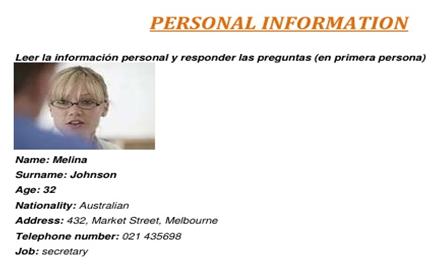
What is your name?My………………………
What is your surname?My…………………………
How old are you?I’m……………………
Where are you from?I’m……………………..
What is your nationality?I’m………………………….
What’s your address?It’s……………………………
What’s your telephone number?My…………………………………
What is your job?I’m………………………………
2. lee e interpreta el dialogo y luego responde la prenguntas.
Hello. My name is Carolina Arango. I am 10 years old and study in school Tricentenario. I live in the neighborhood Paralela with my family. My address is Carrera 24 No. 16 25. My mother is Marta. She is a nurse and my father's name is Antonio and police. I have two brothers, Matthew and Alexander and a sister Tatiana. I love them very much. I am from Colombia and my country is very beautiful. I like going to the park to play football. My mom goes to the grocery store every day and my father visit the stadium on weekends.
Answer the questions.
What is her name? ______________________________________________________________
What is her surname?_______________________________________________________ _____
How old is she? _________________________________________________________________
Where is she from? ______________________________________________________________
What nationality is she? ___________________________________________________________
What is her address? _____________________________________________________________
What’s her phone number? ________________________________________________________
What do you like her? ____________________________________________________________
The numbers 100 to 500
Suggested Activities
3. Escribe en el crucigrama el nombre de los números en ingles
- Ordinal numbers until 31st.
Lesson 4. conmand
actions (common activities)